“Beauty Will Save the World”
Our Philosophy
-
An Ancient Tradition for Composing a Beautiful Life
The Beautiful Soul is a philosophical ideal that emerged in late eighteenth-century Germany, centred on the cultivation of character through the pursuit of beauty.
Developed by the poets Johann Wolfgang von Goethe and Friedrich Schiller, this tradition drew deeply on classical philosophy. It affirmed Plato’s belief in the unity of beauty, goodness, and truth, alongside Aristotle’s conception of eudaimonia—human flourishing attained through a life of reason, wisdom, and virtue. Its proponents believed that the appreciation and creation of beauty shape the mind, cultivate character, and elevate the spirit, drawing us ever closer to this ideal of human excellence.
Although the Beautiful Soul can never be perfectly realised, striving towards it inspires continual self-improvement and the fulfilment of our highest potential.
The philosophy of the Beautiful Soul offers an enduringly optimistic vision of human life: by cultivating ourselves through beauty, we may discover profound meaning and lasting happiness while contributing to a more enlightened society. .
-
A Vibrant Conversation Space for Social and Intellectual Exchange
Salon culture began in sixteenth-century Italy and flourished in eighteenth century France. Salons were gatherings devoted to the art of conversation where people came together to discuss ideas in a spirit of friendship and goodwill. They were hosted by salonnières—extraordinary women who opened their homes and created spaces for intellectual and cultural exchange.
Salonnières advanced principles of equality, tolerance, fellowship, and freedom of expression within their salons. Salon culture played an important role in the emergence of the European public sphere and contributed to major intellectual and artistic movements.
-
Beautiful Souls are Cultivated within Salons
In the eighteenth and nineteenth centuries, German-Jewish salonnières enacted the philosophy of the Beautiful Soul within their salons. They fostered communities in which individuals could improve themselves through beauty in art, music, and conversation. The salon became a space in which self-cultivation and shared reflection advanced Enlightenment thought, Renaissance humanism, and Platonic ideals.
-
For ancient Greek philosophers such as Plato, beauty was a universal value inseparably connected to truth and goodness. Romantic thinkers such as Friedrich Schiller and Johann Wolfgang von Goethe understood beauty as a formative force that awakens moral sensibility, harmonises rational and emotional faculties, and ennobles life itself.
In contemporary culture, beauty is often reduced to physical appearance, reflecting a superficial and individualistic conception of value. Restoring the classical definition of beauty, and the ideals it represents, would contribute to a more enlightened society.
Beauty matters because it fosters happiness, meaning, and human connection. A beautiful landscape can evoke serenity and contentment, while music offers consolation in the face of suffering. The beauty of literature and theatre expands our ability to see the world from perspectives beyond our own. In becoming receptive to beauty, we cultivate empathy and deepen our understanding of the human condition. To develop the ability to perceive and create beauty advances human flourishing and social harmony.
Our Background
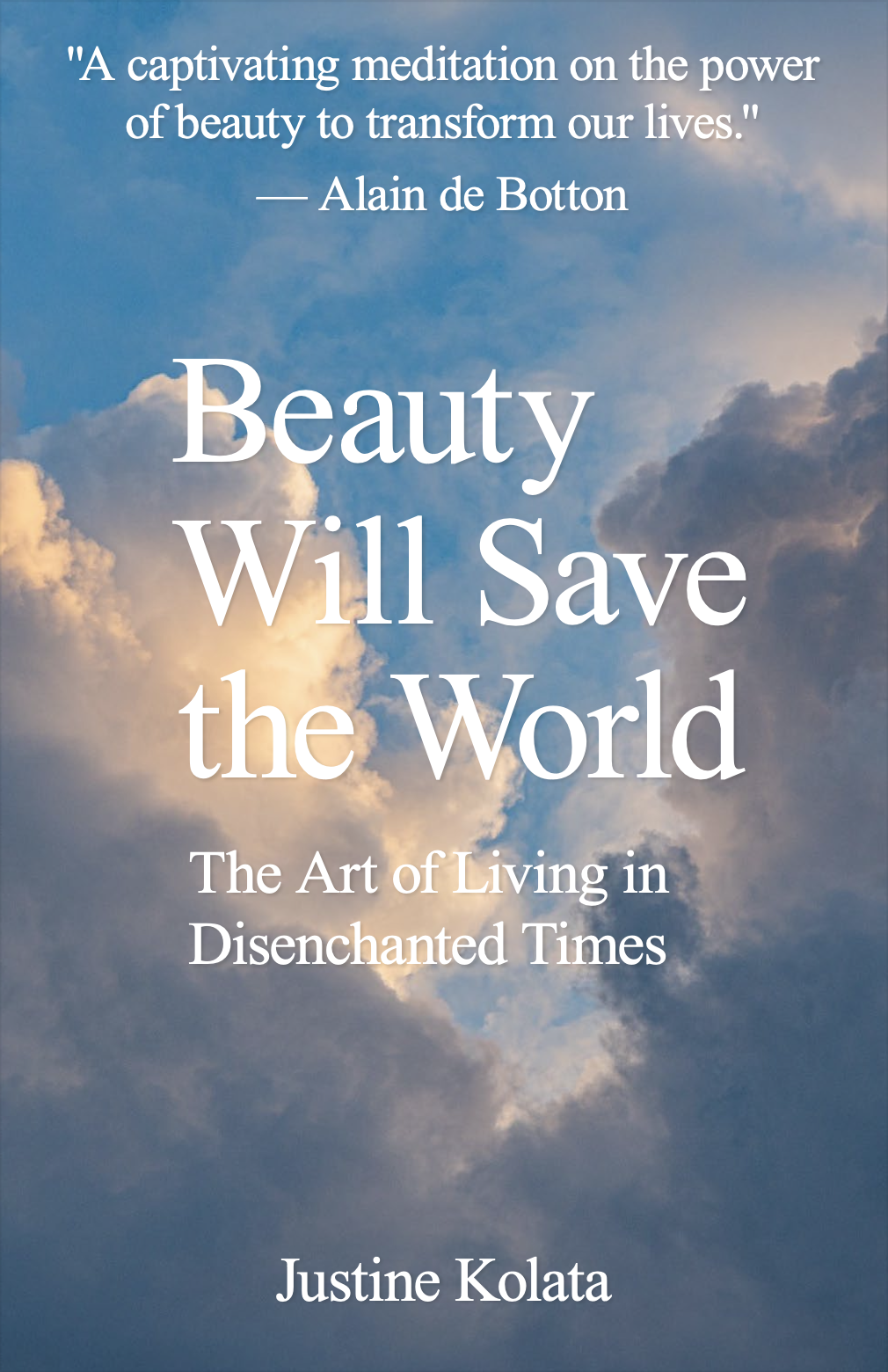
Founder Justine Kolata is a writer educated at Yale University (B.A) and the University of Cambridge (Ph.D.) Her first book, In Pursuit of the Beautiful Soul, examines the philosophy of the Beautiful Soul and salon culture. Her forthcoming book, Beauty Will Save the World, explores why beauty matters and how beauty can enrich our lives as a universal good. Drawing on her scholarly research into beauty and classical ideals, and her experience organising salons since 2013, she founded The Beautiful Soul to revive the practice of this philosophical tradition.
Our Books

“The ideals which have always shone before me and filled me
with the joy of living are goodness, beauty, and truth.”